Ironman Kona 2026: The Ultimate Training and Packing Guide
This is a big year. After four years split between Kona and Nice, the IRONMAN World Championship is coming home. On Saturday, October 10, 2026, men and women will race together in Kona for the first time since the split began, and the entire island already knows it. Nearly 3,000 of the most competitive triathletes in the world will descend on this little stretch of coastline to take on what most agree is the hardest single day in the sport.
If you are one of them, or you are coming to crew, cheer, or support someone who is, this guide is for you. I am going to walk through why this race is so brutal, how athletes actually train for it, the packing list nobody tells you about until it is too late, and why booking your stay now matters more this year than any year in recent memory.
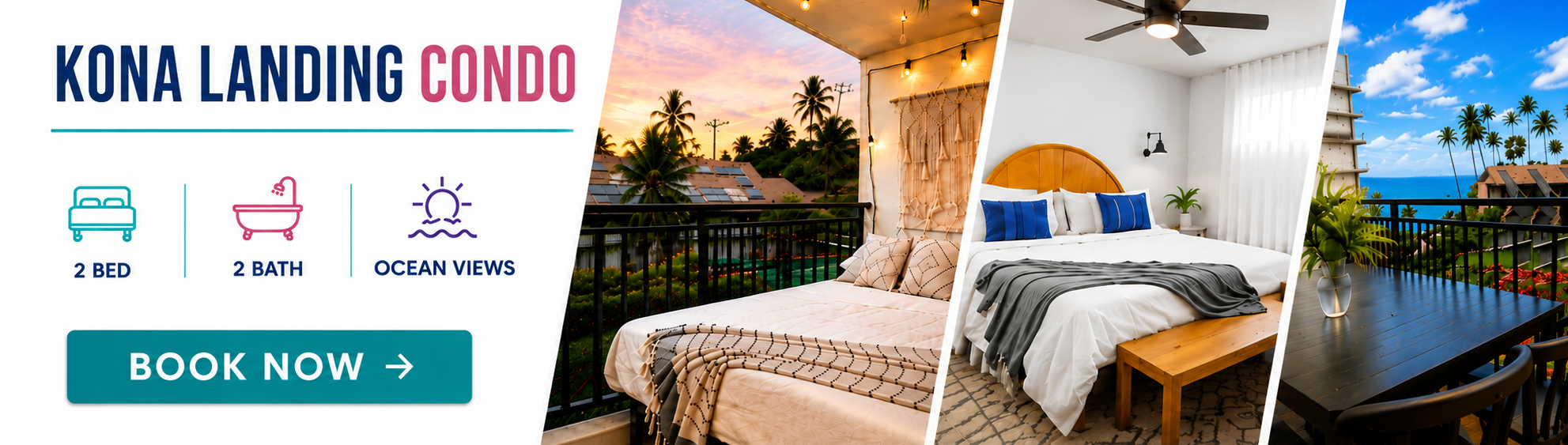
Book Kona Landing for Race Week →
Why Kona Is Considered the Hardest Ironman on Earth
Plenty of Ironman races are long. Only one is Kona. The combination of heat, humidity, and wind here is genuinely unlike anything else on the circuit, and it is not an accident that so many elite athletes who dominate everywhere else have their worst days on this exact course.
You start with a 2.4 mile swim in open ocean, often choppy, directly off the pier in Kailua Bay. I tried swimming out toward the bouys once just to see what it felt like, and I could not even make it to the first one. I am not an Ironman athlete by any stretch, but it gave me real respect for how rough that water actually is. From there it is a 112 mile bike ride out the Queen Kaʻahumanu Highway through miles of black lava fields with zero shade and crosswinds locals call the Mumuku winds, gusts strong enough to genuinely move a bike sideways. Then you finish with a full marathon that takes you back along Aliʻi Drive and out to the infamous Natural Energy Lab, a stretch so exposed and so hot that it has humbled some of the best endurance athletes in the world.
Temperatures on race day regularly sit between 85 and 95 degrees with humidity that makes it feel hotter, and the lava rock radiates heat back up at you on top of it. This is why heat is the real opponent in Kona, more than the distance itself.
How Athletes Actually Train for Kona's Heat
This is the part most first-timers underestimate, and it is exactly why so many serious athletes show up a month in advance instead of flying in the week before. Heat acclimatization is a real physiological process, and it takes time.
Sports scientists generally agree that meaningful heat adaptation takes 10 to 14 days of consistent exposure, and the benefits are measurable: increased blood plasma volume, earlier and heavier sweating, lower resting heart rate, and a body that simply handles heat stress better. Some studies have shown performance improvements of 7 to 10 percent in hot conditions once an athlete is properly acclimated, which can translate to an hour or more over the course of a full Ironman.
A few things athletes do differently once they arrive on island to train:
They avoid training during the absolute hottest part of the day at first. Counterintuitively, coaches recommend getting your body on Hawaii time first, training early, and building heat exposure gradually rather than going straight into a brutal midday session on day one.
They hydrate far more aggressively than they think they need to. Sweat loss in Kona regularly exceeds one liter per hour. A good baseline is starting with 50 percent more fluid intake per hour than what feels normal at home.
They train with extra electrolytes, not less. Heat acclimatization actually reduces how much sodium you lose in sweat over time, but in the early days you need more, not less.
They use ice baths and cooling protocols after hard sessions. Multiple Ironman Kona competitors have specifically mentioned alternating ice baths and hot showers post-workout to help the body recover and adapt faster.
They ride the actual course, especially the Queen K. There is no substitute for knowing exactly where the wind picks up and where the heat radiates hardest off the lava.
This is exactly why athletes who are serious about a strong finish time block out real time on island before race day. A week is enough to get oriented. A month gives your body the chance to genuinely adapt.
Three Ways to Simulate Race Day Conditions Before the Race
Hike the Captain Cook Monument Trail and snorkel at the bottom. This is genuinely one of my favorite hikes in Hawaii, anywhere on the Big Island of Hawaii, and it happens to be a near-perfect simulation of race day. The trail drops nearly 1,300 feet over lava rock fields in full sun with zero shade, and then you have to climb every bit of that elevation back out, often after spending an hour in the water. It is genuinely brutal in the heat, which is exactly the point for training. If you want more hikes on the Big Island of Hawaii, I cover several options. For budget-friendly things to do in Kona, this one is free.
Take a snorkeling tour to get comfortable in open water. If the ocean swim is the part of this race that worries you most, and it should, spending time in open water before race week genuinely helps. A guided snorkel tour is a good way to get your body used to current and swell that you simply do not feel in a pool.
Walk or run the other Kona hikes to build heat tolerance. Several hikes around Kona are exposed, hot, and a great way to layer in extra heat training on top of your actual workouts.
Why Kona Landing Is the Smartest Place to Stay for Race Prep
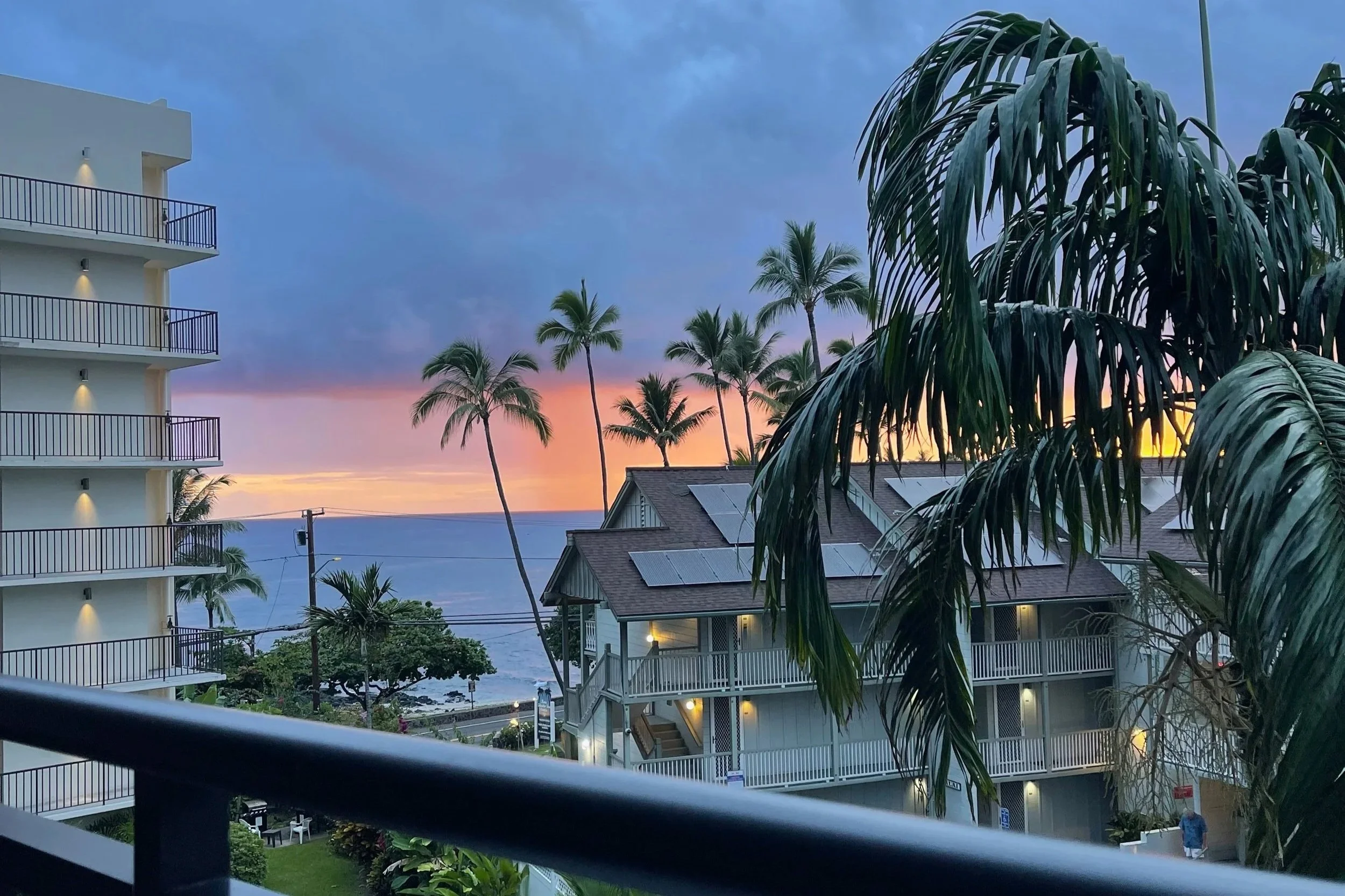
Kona Landing sits right on Aliʻi Drive, on the run course itself, a short walk from the pier where the swim starts and the bike transition happens. If you are training in the weeks before the race, that means you can step outside and be on the actual course in minutes, not driving 20 minutes from a resort up the coast.
Nutrition matters more than people think during an Ironman block. You are not managing race nutrition, sleep, and a brutal training schedule by eating out three times a day. Kona Landing has a full kitchen, and my guide to the best restaurants in Kona also covers where to shop to stock your fridge with healthy snacks. Kona Landing also has a full grill down by the pool, so you can grill your protein to perfection without depending on a restaurant for every meal.
The pool is genuinely great for recovery, even though it is not a cold plunge. Kona Landing's pool sits in the shade most of the day, so the water stays noticeably cooler and more refreshing than you would expect. After a long ride or run in the heat, that matters more than it sounds like it would.
You can actually work from here, which most athletes training for Kona cannot avoid needing to do. Very few people can take a full month off work to train. Kona Landing has high-speed internet and a dining room table that I personally work from constantly when I am there, with ocean views for your morning coffee setup. It is a real home base, not just a place to sleep between workouts.
Every Ironman athlete who has booked Kona Landing for race prep has stayed 25 days or more. That is exactly the kind of stay this property is built for.
2026 is different from past years. With men and women racing together again for the first time since the split, and Ironman explicitly calling this a "Welcome Home" moment for the race, demand for lodging is expected to be heavier than it has been in years. If you are racing, crewing, or just want to experience it, book now rather than waiting.
Mention this blog post to get your welcome basket. If you book your stay at Kona Landing for Ironman 2026, mention this blog post and I will have a welcome basket waiting for you with a handful of fun fitness extras to kick off your trip right.
Check availability at Kona Landing →
Recovery and Acclimating Beyond Training
Training is not the only thing that gets you ready for Kona. Recovery matters just as much, and there are a few spots nearby worth building into your routine.
Morning yoga at the Royal Kona Resort. They run a gentle 7am yoga class that is perfect for stretching out and getting your body ready for the day's workout without adding more intensity. I go almost every morning when I am in town. While you are there, it is worth picking up a day pass at their spa too. After a hard training block, a massage genuinely speeds up how you feel the next day.
Coffee, because most athletes need it and Kona has some of the best coffee in the world. Kona is famous for its coffee for a reason. I like to get coffee at coffee shops around town between hard training days, and I wrote up my favorites in my Kona coffee shops guide if you want a few new places to try during your stay.
The official Ironman store is walkable from Kona Landing. If you want race week gear or just want to see the energy build as the village goes up, it is an easy walk down Aliʻi Drive.
There is a farmers market set up right on Aliʻi Drive, though it leans more toward souvenirs than groceries. If you want something genuinely fun, look up the dates for Kokua Kailua, also known locally as the Sunday Stroll, which happens one Sunday a month right on Aliʻi Drive. They close the street to traffic and it turns into a lively market with local vendors, fresh fruit, and live music. Worth timing a visit around if the dates line up with your trip.
What to Pack for Ironman Kona: The Things Nobody Warns You About
Every generic Ironman packing list covers the obvious stuff: wetsuit, helmet, running shoes. Here is what actually trips people up specifically because of Kona's climate and course conditions.
For the Heat and Humidity
Reef-safe, zinc-oxide mineral sunscreen. Hawaii state law actually bans chemical sunscreens with oxybenzone and octinoxate. Bring mineral sunscreen specifically, not whatever you grabbed at the drugstore at home.
A cooling towel or neck wrap. Something you can wet down and wrap around your neck between training sessions makes a real difference in how fast your core temperature drops.
Electrolyte tablets in higher volume than you think you need. Plan for more than your normal training races. Salt loss in Kona heat is significant, and cramping is one of the most common reasons athletes slow dramatically in the back half of the marathon.
A handheld misting fan. Sounds small. Genuinely useful during the hottest training blocks and even on race morning while waiting at the start.
For the Wind and Lava Fields
Extra goggles, including a dark or mirrored pair. The sun reflecting off the ocean at the Kona swim start is intense even at sunrise. Bring a pair built for bright glare, not just your standard clear lenses.
Tire levers, a spare tube, and CO2 cartridges you've actually practiced using. The Queen K is unforgiving and far from a bike shop. Many athletes bring backups even beyond what they think they will need.
For Your Skin (This One Surprises People)
Anti-chafe balm, applied generously, before you think you need it. Heat and sweat in Kona make chafing worse and faster than almost anywhere else athletes train. Hips, underarms, neck, and anywhere your tri suit seams sit are the usual culprits.
Aloe vera gel. Even with great sunscreen habits, the Kona sun is intense enough that many athletes end up using aloe most evenings during a heat acclimatization block.
For Race Morning Specifically
A flashlight or headlamp. Body marking and transition setup happen well before sunrise.
Cash in small bills. Several pop-up food vendors along the course and around town during race week are cash only, and ATMs in Kona get unpredictable by Friday night of race week.
A dry clothes bag for your support crew to bring to the finish line. You will want warm, dry clothes waiting for you, and it is easy to forget to plan this in advance.
If You're Coming to Support, Not Race
If you are crewing or just cheering someone on, Kona during race week is genuinely one of the best free spectator experiences in Hawaii. A few things worth knowing:
The swim start at the pier is the best early morning moment of the whole day. Get there before the cannon goes off.
Once the bike leg clears out, the town goes quiet for a few hours. This is a great window to grab lunch somewhere along Aliʻi Drive. My Kona restaurant guide has plenty of solid options within walking distance of Kona Landing.
Aliʻi Drive is the place to camp out for the marathon. Bring a beach chair, an umbrella, and snacks, and settle in.
The finish line stays open until midnight. The official cutoff is 17 hours, and the scene on Aliʻi Drive as the final finishers come in after dark, often to the loudest cheers of the whole day, is one of the most emotional things you will witness in sports.
Bring real sun protection if you're standing on the course all day. The lava rock radiates heat back up, and there is no shade anywhere along most of the route.
The Bottom Line
2026 is not a normal Kona year. The race is reunified, the island is expecting a bigger crowd than it has seen in years, and the athletes who take training and acclimatization seriously are already booking their stays. If Kona Landing sounds like the home base you need, whether for a focused week or a full month of heat training, now is the time to lock in your dates.